Money is an emotional creature. It can spark joy, spark stress, or spark that moment at 1 a.m. when you google “Can I retire on vibes alone?” (Unfortunately, no. The math people would like a word.) But while finance often feels overwhelming, here’s a fun fact: studies show that people who have a written financial plan are far more confident about their future. According to a recent Schwab survey, 65% of people with a written plan feel financially stable, compared to just 40% without one.
Blog
Articles
Our goal is to keep you, your family, and your friends up to date on everything from finance to health care. We strive to help you make the most informed financial decisions to help you achieve financial success, so you can enjoy everything life has to offer. That's what our blog is for!
The State of the Economy in 2025
Welcome to 2025, where the economy is like your Uncle Bob at Thanksgiving—predictable in its unpredictability. The headlines are full of dramatic twists, inflation is the talk of every dinner table, and interest rates have been on more rollercoaster rides than a county fair. But don’t worry; we’ve got your back. Let’s break it all down, keep it light, and figure out how to make the most of this wild economic ride.
The 2025 Retirement Checklist: Are You Forgetting Something Important?
Retirement planning isn’t exactly the kind of thing you want to procrastinate, yet somehow, it ends up on the same to-do list as “clean the garage” or “start a kale garden.” But hey, 2025 is creeping up faster than that mystery charge on your credit card, so let’s get serious for a moment. Are you ready for the golden years, or are there a few glaring gaps in your plan? Let’s break it down with a checklist that will have you confidently waltzing into 2025.
Vaccines and the Stock Market
If there’s one thing that can move the economy and stock market forward, it’s hope. This year, that hope is being presented in the form of COVID-19 vaccines. Economists and Wall Street analysts have long proclaimed that comprehensive economic recovery is not possible until we have contained the virus. The prospect of wide distribution of effective vaccines and herd immunity by the end of the year has put recovery in our crosshairs.
When to “Buy Low”
The beginning of the year is typically full of hope. We make New Year’s resolutions, and it may take a few months for our enthusiasm (and vigilance) to wane. There’s also the “January Effect,” when the stock market generally gets a performance boost thanks to tax harvesting in December and subsequent reinvestments. But even that phenomenon tends to fade.
Global Recovery in a Post-Pandemic World
In 2020, the World Economic Forum published its annual Global Competitiveness Report, as usual. However, in light of the global pandemic, it put its long-standing Global Competitiveness Index rankings on hold. Instead, the report focused on priorities for recovery and revival instead of competition.
What is “Stakeholder Capitalism”?
In its monthly Investment Insights publication, Merrill Lynch noted that while nationalism has been a strong trend throughout the past few years, globalism in the prior 30 years did much to reduce poverty worldwide. As trade agreements shifted many U.S. jobs and operations overseas, the average income of the lower 50% of global earners nearly double between 1980 and 2016. However, this came at a price, including the mass exodus of U.S. jobs and stagnant wages at the low-income scale.
What’s Ahead for the Stock Market?
Oil prices are influenced by supply and demand, and 2020 was a great demonstration of this principle. With global and local shutdowns due to the spread of the coronavirus, there was less demand for products and services. While online shopping was up, foot traffic in stores languished and retailers suffered from reduced consumerism. Wholesale orders dropped, as did the need to transport them from manufacturers to distributors to vendors.

Top 10 Actions When Preparing For Retirement
Planning for retirement income may seem like a daunting task, but can help you get a handle on preparing for your financial future.
Money Confidence 101: A Friendly Guide to Building a Financial Life You Actually Feel Good About
Money is an emotional creature. It can spark joy, spark stress, or spark that moment at 1 a.m. when you google “Can I retire on vibes alone?” (Unfortunately, no. The math people would like a word.) But while finance often feels overwhelming, here’s a fun fact: studies show that people who have a written financial plan are far more confident about their future. According to a recent Schwab survey, 65% of people with a written plan feel financially stable, compared to just 40% without one.
Annuity Insights
The Insured Retirement Institute (IRI) – a trade association for the retirement income industry – advocates annuities as a vehicle that can help provide retirees income, guaranteed by the insurer. The organization has been actively educating and lobbying legislators to expand annuity access as part of employer-sponsored retirement plans. Under this scenario, whatever portion the investor contributes to an annuity option in his 401(k) would be eligible for distribution throughout his lifetime based on an estimated calculation of life expectancy.
Retirement Planning Insights
Amid lost jobs and a scaled-back economy in 2020, some workers may have decided to retire earlier than planned. There are a couple of Social Security strategies worth considering in this scenario. First, if both spouses are over age 62, determine if you can make ends meet by taking only one Social Security benefit while letting the other benefit accrue to a higher level. It may be better to let the higher earner’s benefit accrue untapped as long as possible.
How Demographics Affect the Economy
Back in 2019, economists claimed that the large population of older Americans dubbed the “silver tsunami,” was creating a drag on the economy. The fear was that Americans were aging toward retirement at a faster rate than young adults were entering the workforce. Not only does this put a strain on our finance-as-we-go Social Security and Medicare programs, but a smaller workforce is less able to drive economic growth in the future.
Vaccines and the Stock Market
If there’s one thing that can move the economy and stock market forward, it’s hope. This year, that hope is being presented in the form of COVID-19 vaccines. Economists and Wall Street analysts have long proclaimed that comprehensive economic recovery is not possible until we have contained the virus. The prospect of wide distribution of effective vaccines and herd immunity by the end of the year has put recovery in our crosshairs.
When to “Buy Low”
The beginning of the year is typically full of hope. We make New Year’s resolutions, and it may take a few months for our enthusiasm (and vigilance) to wane. There’s also the “January Effect,” when the stock market generally gets a performance boost thanks to tax harvesting in December and subsequent reinvestments. But even that phenomenon tends to fade.
Money Confidence 101: A Friendly Guide to Building a Financial Life You Actually Feel Good About
Money is an emotional creature. It can spark joy, spark stress, or spark that moment at 1 a.m. when you google “Can I retire on vibes alone?” (Unfortunately, no. The math people would like a word.) But while finance often feels overwhelming, here’s a fun fact: studies show that people who have a written financial plan are far more confident about their future. According to a recent Schwab survey, 65% of people with a written plan feel financially stable, compared to just 40% without one.
What the Stimulus Could Mean for Investors
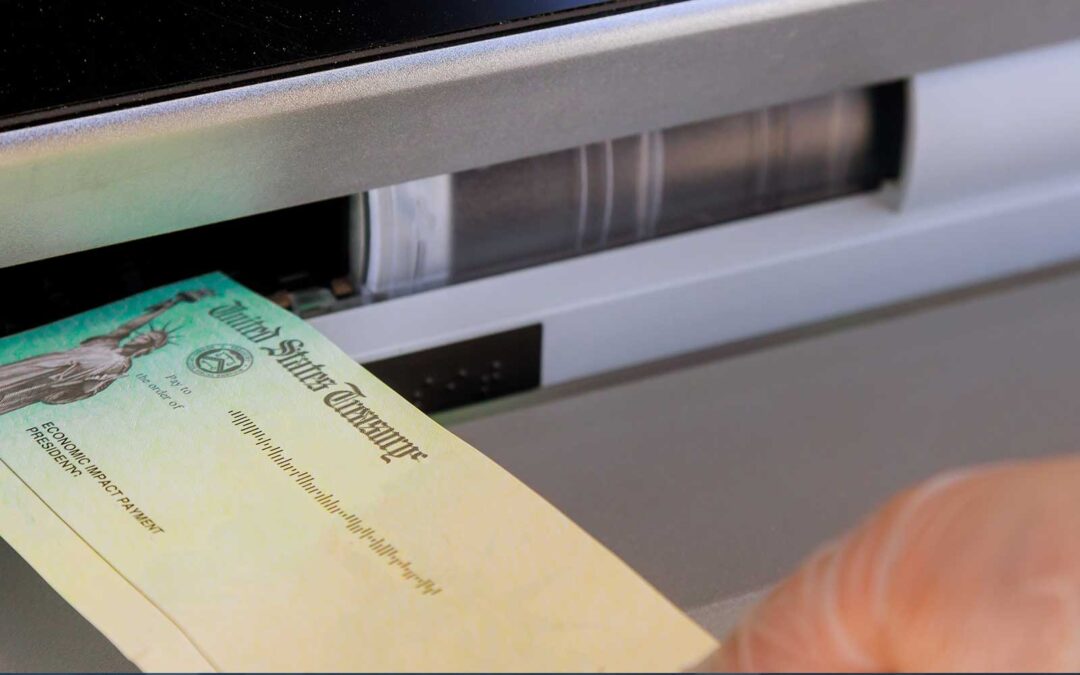
Millions of Americans have embraced the new relief money resulting from the $1.9 trillion America Rescue Plan. They’ve been able to pay for utilities and put food on the table. Those who maintained their jobs have embraced the payout as well, but for different reasons. For them, it’s not about survival, it’s about ways to spend that lovely windfall. It’s also about jumpstarting the economy right about the time people can get back out and find work.
Annuity Insights
The Insured Retirement Institute (IRI) – a trade association for the retirement income industry – advocates annuities as a vehicle that can help provide retirees income, guaranteed by the insurer. The organization has been actively educating and lobbying legislators to expand annuity access as part of employer-sponsored retirement plans. Under this scenario, whatever portion the investor contributes to an annuity option in his 401(k) would be eligible for distribution throughout his lifetime based on an estimated calculation of life expectancy.
Retirement Planning Insights
Amid lost jobs and a scaled-back economy in 2020, some workers may have decided to retire earlier than planned. There are a couple of Social Security strategies worth considering in this scenario. First, if both spouses are over age 62, determine if you can make ends meet by taking only one Social Security benefit while letting the other benefit accrue to a higher level. It may be better to let the higher earner’s benefit accrue untapped as long as possible.
How Demographics Affect the Economy
Back in 2019, economists claimed that the large population of older Americans dubbed the “silver tsunami,” was creating a drag on the economy. The fear was that Americans were aging toward retirement at a faster rate than young adults were entering the workforce. Not only does this put a strain on our finance-as-we-go Social Security and Medicare programs, but a smaller workforce is less able to drive economic growth in the future.
Vaccines and the Stock Market
If there’s one thing that can move the economy and stock market forward, it’s hope. This year, that hope is being presented in the form of COVID-19 vaccines. Economists and Wall Street analysts have long proclaimed that comprehensive economic recovery is not possible until we have contained the virus. The prospect of wide distribution of effective vaccines and herd immunity by the end of the year has put recovery in our crosshairs.